Understanding Soft Tissue Repositioning After Cheekbone Reduction Surgery
- Dr. Park

- Feb 16, 2025
- 3 min read
Cheekbone reduction surgery is a popular procedure for facial contouring. However, it's crucial to understand the soft tissue changes that occur after the surgery. This post aims to provide detailed information about soft tissue repositioning after cheekbone reduction and offer guidance on managing these changes.
What Happens to Soft Tissue After Cheekbone Reduction?
Cheekbone reduction surgery reduces the size of the bones, making the face appear smaller. However, the volume of the soft tissue (fat) surrounding the bones does not decrease proportionally. This means that after the surgery, there will be excess soft tissue.
Instead of trying to prevent soft tissue changes, the focus should be on properly repositioning the inevitable excess tissue.
Two Mechanisms of Soft Tissue Repositioning
Soft tissue repositioning occurs through two main mechanisms:
1. Internal Soft Tissue Repositioning (Balloon Effect)

Deep Buccal Fat Pad: The deep buccal fat pad is a pocket of fat located between the cheekbone and the temple bone. When the cheekbone is moved inward, the deep buccal fat pad can be compressed, causing it to bulge upward or downward. This is known as the "balloon effect."

Variability: The balloon effect can add volume to the temples or below the cheeks, but it doesn't happen to everyone. The amount of body fat and the size of the deep buccal fat pad can influence this effect.


2. External Soft Tissue Repositioning
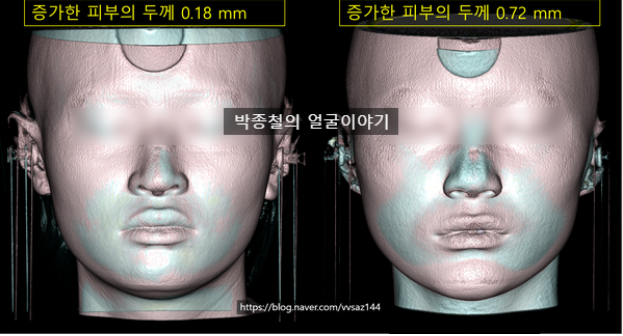
Increased Thickness: The soft tissue outside the cheekbone also undergoes repositioning after the surgery. Studies have shown that the soft tissue around the nose can become thicker after cheekbone reduction.
Influence of Body Fat: The change in soft tissue thickness is more significant in individuals who gain body fat after the surgery.Those who reduced body fat showed an increase of 0.18 mm compared to before the surgery, while those who increased body fat showed an increase of 0.72 mm.
Soft Tissue Repositioning vs. Skin Laxity or Sagging
It's important to differentiate soft tissue repositioning from skin laxity, which is often associated with aging.
Skin Laxity: Skin laxity refers to the loss of skin elasticity and firmness, resulting in sagging or drooping.

Skin laxity refers to the loss of skin elasticity and firmness, resulting in sagging or drooping.

Soft Tissue Repositioning: Soft tissue repositioning, on the other hand, can have positive effects by adding volume to the face.

Managing Soft Tissue After Cheekbone Reduction
Some surgeons attempt to prevent soft tissue repositioning by moving the cheekbone upward or minimizing tissue dissection. However, the effectiveness of these methods is not well-established.
Cheekbone Upward Movement: It's unclear whether moving the cheekbone upward has a significant impact on soft tissue repositioning.

Dissection Range: In my patients, there was no significant difference in the amount of dissection, yet the patterns of soft tissue repositioning varied. This implies that factors other than the dissection range may have a greater impact on soft tissue repositioning.
Quick Cheekbone Surgery: Quick cheekbone surgery, which minimizes dissection in the 45-degree cheekbone area, may result in less soft tissue change due to reduced bone movement.
Post-Surgery Care
The most effective way to manage soft tissue after cheekbone reduction is to reduce body fat and maintain a healthy lifestyle. This includes:
Nutrition: Eating a balanced diet.
Basic Skin Care Program
Mouth Opening Exercises: Starting two weeks after the surgery, perform mouth opening exercises to promote blood circulation and reduce swelling.
Cheekbone Reduction: Careful Consideration and Preparation
Cheekbone reduction surgery can significantly improve facial aesthetics. However, it's crucial to understand the potential changes that may occur after the surgery and how to manage them.
If you have existing skin laxity, cheekbone reduction alone may not achieve the desired results. In such cases, additional procedures like thread lifts may be recommended.
Conclusion
This post aims to provide valuable information to those considering cheekbone reduction surgery. If you have any questions, please feel free to ask.


Comments