1-Year Jaw Reduction Surgery Review: Mandibular Angle, Cortical Bone & Muscle Resection Results
- Dr. Park

- Feb 1, 2025
- 3 min read
Hello, I'm Dr. Jong-cheol Park, a specialist in oral and maxillofacial surgery.
Today, we will examine the 1-year post-operative results of a patient who underwent jaw reduction and zygoma reduction surgery, including cortical bone resection and muscle resection.
There are various ways to reduce facial width, but among facial contouring surgeries, the following three procedures can effectively reduce the width of the jaw area:
Mandibular Angle Resection
Cortical Bone Resection
Muscle Resection
Through this case study, we will see the actual changes experienced by a patient who underwent these three procedures and learn about the characteristics and effects of each surgery.
Differences Between Mandibular Angle Resection and Cortical Bone Resection
The bone structure of the jaw area consists of the outer cortical bone and the inner cancellous bone. To reduce facial width from the front, the outer cortical bone must be removed.

Mandibular angle resection involves resecting the angular part of the mandible, providing a vertical reduction effect. Cortical bone resection involves removing the cortical bone, providing a horizontal reduction effect..

Area of Muscle Resection
The method of muscle resection may vary depending on the surgeon, but I use a method that removes the middle part of the muscle to prevent postoperative cheek hollowing or damage to the facial nerves.

Case Study
1) Pre-Op Image
The overall face shape is square, and this feature is more clearly revealed through 3D rendering images. The patient no longer felt the effects of Botox injections, and CT scans showed a muscle thickness of over 15mm at the occlusal plane.


2) Surgical Plan
Jaw Reduction Surgery: Mandibular angle resection (resection from the ear base), cortical bone resection, muscle resection (20*30*5)
Zygoma Reduction Surgery: 3mm bone resection at 45 degrees, 2mm standard of metal plate used at 45 degrees, 7mm standard of metal plate used on the side zygoma
Nonsurgical Rhinoplasty
3) Surgical Results
Axial View: Comparing muscle thickness before and after surgery showed that the right muscle reduction was less than the left. This is a difference that can occur depending on the patient's chewing habits.

Jaw Reduction Surgery Coronal View: As with the axial view, the right muscle reduction was less than the left, and the amount of cortical bone resection was 8.73mm and 9.83mm on one side, respectively, totaling more than 18mm.

Jaw Reduction Surgery Soft Tissue Repositioning: After surgery, the soft tissue around the lips became slightly thicker, but as seen by the green shadow in the eyebrow area, this is a subtle change that can also be changed by the expression of the area, so it is judged to be clinically insignificant.
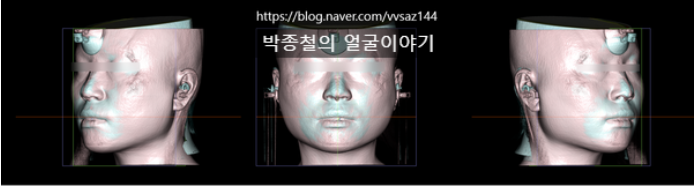
Soft Tissue Repositioning
4) Comparison of Pre-Op and 1-Year Post-Op Clinical Photos
You can see that the face shape has changed naturally.


Conclusion
We have reviewed the 1-year results of the comprehensive effect of the three jaw reduction surgeries (mandibular angle resection, muscle resection, and cortical bone resection) with a real case.
I hope it will be of practical help to those who are considering jaw reduction surgery.
If you have any questions, please feel free to ask. Thank you.


Comments